Wednesday, 20 December 2017


Monday, 18 December 2017
Tuesday, 5 December 2017
Tim who?
My thanks to Liberal Democrat councillor Sue James’s blog
for reminding me of this, first published by Sue on 30th January
2017:
“In a Cornish Times interview, Tim Farron gave this message
to those concerned about the future of our NHS `A LibDem led council would not
accept the Government’s Sustainability and Transformation Plan (STP) which is
currently being consulted on.” He went on to say “This is a hugely important
and largely misunderstood plan. It’s not about improving healthcare services,
it’s about cuts of upto a quarter £billion. It’s unthinkable that a LibDem led
Cornwall Council would give this plan support.’”
Sunday, 4 December 2016
It's Sunday night and the results are in...
It turns out that only 46% of Austrians are Nazis. Funny what counts as good news these days.
Tuesday, 22 November 2016
Are there really 500 vulnerable elderly people at risk of harm and neglect in Cornwall's residential care homes?
Just had a quick flick through the Care Quality Commission's online publication of inspection reports. Filter by Cornwall and then search those rated as "requires improvement" and you can see just how many residential care homes have been given exactly the same rating as the Panorama'd Clinton House, St Austell.
I make it 16 homes, with an average of 30 residents each - so around 500 elderly, vulnerable people, just waiting for an undercover reporter with a hidden camera. I'm happy to list those homes if anyone wants - one is run directly by Cornwall Council, another by its spawned charity Cornwall Care Ltd; the rest are completely private.
The CQC says there are 227 care homes for the elderly in Cornwall, and none is currently rated "inadequate." But the lesson of the Clinton House case is that a rating of "requires improvement" is, a bit like the CQC itself, inadequate.
I have previously blogged about the risks of a long memory. Does anyone else remember this speech in the House of Commons, from 1997? The sound of chickens arriving home?
I make it 16 homes, with an average of 30 residents each - so around 500 elderly, vulnerable people, just waiting for an undercover reporter with a hidden camera. I'm happy to list those homes if anyone wants - one is run directly by Cornwall Council, another by its spawned charity Cornwall Care Ltd; the rest are completely private.
The CQC says there are 227 care homes for the elderly in Cornwall, and none is currently rated "inadequate." But the lesson of the Clinton House case is that a rating of "requires improvement" is, a bit like the CQC itself, inadequate.
I have previously blogged about the risks of a long memory. Does anyone else remember this speech in the House of Commons, from 1997? The sound of chickens arriving home?
Friday, 11 November 2016
Coming soon - the new Jerusalem

Much relief at County Hall yesterday over the St Ives planning decision, in which the courts have ruled that councillors acted properly in allowing a ban on new-build second homes. The implications for local development plans across Cornwall are immense.
Among those sharing the love was Rob Nolan, Liberal Democrat Parliamentary candidate for Truro and Falmouth (or wherever the Boundary Commissioners decide) who took to BBC Radio Cornwall to denounce the development of green field sites.
Of course, it was only radio - but it sounded remarkably like the same Rob Nolan who chairs Cornwall Council's Strategic Planning Committee, and who recently, and enthusiastically, supported the 236-lodge Camel Creek holiday resort between Wadebridge and St Columb - which is, er, in the open countryside.
Wednesday, 9 November 2016
Will Trump now come to Tintagel?
Congratulations to John Mappin, the Tintagel hotelier whose bank balance is about to be swelled by his astute punt on the outcome of the United States Presidential election.

Mr Mappin correctly identified a growing "sod the lot of them" attitude among voters, responsible for the Brexit decision in the UK earlier this year and which he believed was also prevalent in the US.
I'm listening to Donald Trump on the radio right now. He sounds less loony than he did yesterday, saying he now wants to "reach out" to those who didn't vote for him.
We shall see. For the Democrats, the lesson is clear. They should have gone with Bernie Sanders.

Mr Mappin correctly identified a growing "sod the lot of them" attitude among voters, responsible for the Brexit decision in the UK earlier this year and which he believed was also prevalent in the US.
I'm listening to Donald Trump on the radio right now. He sounds less loony than he did yesterday, saying he now wants to "reach out" to those who didn't vote for him.
We shall see. For the Democrats, the lesson is clear. They should have gone with Bernie Sanders.
Tuesday, 8 November 2016
Cornwall's care crisis
Last night's news about the Clinton nursing home at St Austell, closed because of as-yet-unspecified "safeguarding" issues, throws sharply into focus the crisis caused by an ageing population and an underfunded service. For "underfunded" I could just as easily have written "uncaring" - it is all about priorities.

The Clinton home is part of the Morleigh group and can take up to 46 residents. Many have dementia.
In February, the Care Quality Commission made an unannounced inspection, found several things wrong, and told the management to pull their socks up. You can read that report here.
Such was the inspectors' concern - scalding risks, incontinence odours, residents forced to share flannels, inadequate respect for dignity etc - that they went back a few weeks later. Things appear to have gone downhill from there. Perhaps the real question is why it took nine months before anyone thought it was a good idea to move the residents somewhere else.

The Clinton home is part of the Morleigh group and can take up to 46 residents. Many have dementia.
In February, the Care Quality Commission made an unannounced inspection, found several things wrong, and told the management to pull their socks up. You can read that report here.
Such was the inspectors' concern - scalding risks, incontinence odours, residents forced to share flannels, inadequate respect for dignity etc - that they went back a few weeks later. Things appear to have gone downhill from there. Perhaps the real question is why it took nine months before anyone thought it was a good idea to move the residents somewhere else.
Sunday, 6 November 2016
Never a good idea for a politician to duck a straight question
And just for the record, the correct answer for any leader of the Opposition, when asked if he/she wants a general election, is always "yes."
Saturday, 5 November 2016
Maybe I should move to Finland
For reasons which might become clear over the next few weeks, I am currently investigating a variety of alternative funding models for journalism. The conventional media - hooked on listicles, click-bait and "sponsored content" - has seen its reputation plummet since I started this game 40 years ago (not that I think it's all my fault.)
There seems no doubt that the British press has set a benchmark for low standards and that the current regulatory framework has completely failed the public. Of all the 28 countries in the EU in 2014-15 the written press had the lowest trust rating, below even Greece and Serbia, according to a EBU report this summer.

There seems no doubt that the British press has set a benchmark for low standards and that the current regulatory framework has completely failed the public. Of all the 28 countries in the EU in 2014-15 the written press had the lowest trust rating, below even Greece and Serbia, according to a EBU report this summer.

Friday, 4 November 2016
Britain after Brexit
This is what's at risk if we allow elected Members of Parliament to debate Article 50:
Thursday, 3 November 2016
Gina Miller - woman of the year?

Nothing like a good old constitutional crisis to sell newspapers (or blogs.) Expect a good deal of humbug as we now play "hunt the issue." The Brexit referendum decision is one thing. The right of Parliament to scrutinise and debate the process is another. If you want to know who is winning, watch the markets. Within the past few minutes, the pound has risen by 1 per cent.
Wednesday, 2 November 2016
On-farm slaughter, Mad Cow Disease and the balance of risk
Decades ago, long before the then minister John Gummer sent
his press office into meltdown by trying – in front of TV cameras - to make his
young daughter eat a beef burger when she clearly didn’t want to, I was one of
those nosy-parker reporters who kept asking awkward questions about Mad Cow
disease.

We later learned that there had been a long-running and very
serious feud between the Department of Health and what was then called the
Ministry of Agriculture, Fisheries and Food over the level of risk to
humans. I’m happy to report that
although scores of humans did indeed die from a variant of the illness, which
the government accepted was “most probably” caused by eating infected beef,
fears of a widespread epidemic claiming thousands of lives appear to have been
overblown.
And although there is the occasional, unexplained,
spontaneous outbreak of BSE, the raft of regulations introduced in the wake of
Mad Cow disease ensures that the risk to humans remains vanishingly small.
You might therefore think it is surprising that I would now
promote the case for relaxing one aspect of those regulations. I do so for two reasons – first, because the
regulation itself fails to do the job it is required to, and secondly because
there would be widespread social and economic benefits to rural Cornwall. This is the rule book relating to mobile
on-farm slaughter.

On-farm slaughter used to be widespread, but has now almost
completely disappeared because – after Mad Cow disease – the government was
determined to clamp down on any risks associated with high-risk offal,
particularly from bovine spines.
Instead, cattle now have to be transported – often over long distances –
to reach slaughterhouses which meet very high standards of clinical
cleanliness.
What makes the existing rule fall on the wrong side of
“daft” is that it is still perfectly OK to slaughter “at home” provided you eat
the beef yourself, and don’t try to sell it to anyone. The Food Standards Agency says: “It should be
noted that home slaughter is likely to carry a greater human health risk than
slaughter that takes place in approved premises.”
But there are still some farmers, particularly smallholders,
who do not like the potentially distressing business of transporting livestock
to slaughter. So how do you safely
slaughter on your farm? The answer is
that you call an expert – but experts now are themselves becoming very rare.

One such expert is Paul Marshall, of Wadebridge (left,) whose
family has worked in the livestock slaughter business for generations. He could well be the last mobile slaughterman
in Britain. Paul’s job is not without
risk. Not from the livestock, but from
bureaucrats.
Technically, if he kills the beast it has been “placed on
the market” and both he and the farmer risk prosecution. If he merely “assists” in the slaughter, then
he is in the clear. The farmer still
risks prosecution if any meat is sold because the rules say “the owner must
only supply his immediate family.” So
presumably spouse and children are OK, but great uncles and second cousins are
not.

From the point of view of protecting human health, the rules
are at best very weak. They should be
re-visited and re-written. There would
also be a social and economic benefit to keeping the value of this part of the
meat trade within rural areas, rather than see it lost to multi-national
corporations.
The rules, of course, have their roots in an office in
Brussels. It might be that Brexit
changes the game. My essential point is
that it was not traditional mobile slaughtermen who caused Mad Cow Disease,
more than 30 years ago. It was most
probably contaminated cattle feed and a high-tech industrial approach to
agriculture. We might have thrown the
baby out with the bathwater.
Before you park your car, think of a word to describe your sex

How would I describe my sex? I'm not sure I understand the question, but surely you can tell by the brilliant way I park my car. You have to feel sorry for the poor official who had to reply on behalf of the council: "It is important to know things like gender orientation so we can target services. By collecting monitoring information we are able to provide evidence that we are reaching people that need our services and identify when we are not," she said."
Monday, 31 October 2016
The curse of a long memory

I do not doubt the sincerity with which they campaigned at the weekend. But readers with long memories will have no trouble recalling what happened the last time a Right-wing government with an anti-democratic agenda tried this, back in 2010/2011.

If you want to know how your MP voted in the The Parliamentary Voting System and Constituencies Bill on 2nd November, 2010, this blog was there to record it at the time.
All six of Cornwall's MPs, including the Liberal Democrats, voted in favour of Devonwall, and against maintaining the integrity of the border.
Wednesday, 26 October 2016
A heart-breaking disaster
I write this with a barely-suppressed tear in my eye and a couple of text books open on the desk in front of me. I am searching, painfully, for an answer. Up in the orchard, I have suffered a disaster. All of my bees have died.
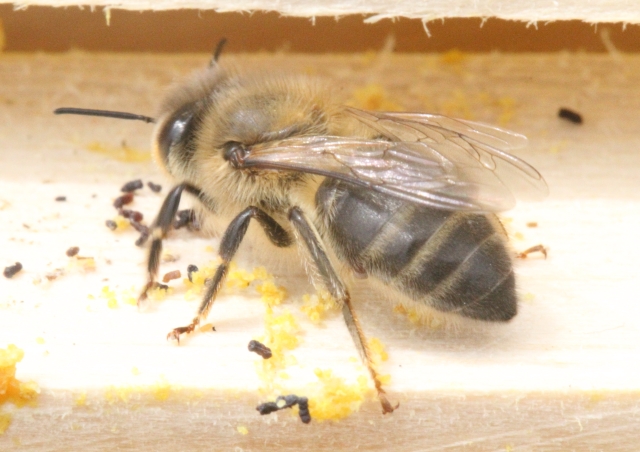 Their demise appears to have been very sudden. A few weeks ago they were buzzing about very contentedly, and appeared to be very successful at filling their frames with honeycomb.
As a novice beekeeper, I might have failed to notice any distress – but I’m sure I did everything the books advise, trying to strike a balance between observation and not interfering too much. The hive is in good order and the bees had plenty of food.
The text books offer a bewildering array of possible causes. The West Country appears to be a relatively dangerous place for bees, with the most recent British Beekeepers Association surveys reporting around 15% of colonies dying here in recent years, every year. There is much talk of predation by wasps, illnesses caused by the varroa mite virus and other diseases, and – increasingly – the consequences of crop spraying.
Also, my bees were a “rare breed” – the small black Cornish honeybee – which is supposed to be relatively immune to varroa. But I guess there must be a reason why the breed is rare. And bees do seem vulnerable all over the world.
A few years ago, a third of the entire bee population of the United States died in one winter. The precise cause is still a mystery but there is no shortage of beekeepers blaming their over-chemicalised agricultural sector.
A friend told me he thought he had seen one of the large Asian hornets in the village recently. They were first seen in Gloucestershire a few months ago and have now been confirmed in Somerset. So far there is no official record of them in Cornwall, but they are deadly to bees.
I did know that in summer, worker bees live on average for only six weeks. In winter, with less work to do, they can survive for up to five or six months. Queens live for up to four years, but rely on the worker bees for food.
The experience reminds me of those years, a few decades ago, when my children went through a series of small pets. The smaller the animal, the more rapidly they seemed to die without warning. Hamsters, for example, which raced around their cage wheels one day, would be strangely reluctant to wake up the next.
It is not possible to over-estimate the value of bees, particularly in terms of return on investment. They contribute more than £650m to the UK economy a year through their pollination services. Some 85% of the UK’s apple crop and 45% of the strawberry crop relies on wild bees and managed honeybees to grow.
None of which gets me very far in considering what I can do now. The floor of the hive is covered in dead bees. It is heart-breaking. I welcome suggestions. I suspect there is nothing else for it, other than to scrub out the hive and start again in the spring.
Wednesday, 19 October 2016
If you think the loss of Marmite was bad, you ain’t seen nothing yet

The cartoonists, of course, had a field day. We are now at roughly the half-way point between the Brexit vote and the formal “triggering” of our departure from the European Union. Some of the chickens are coming home to roost. The impact on rural areas is going to be particularly noticeable.
As I write this, fishermen are meeting in Newlyn to consider what their industry might look like in a few years. Freed of the Common Fisheries Policy, which was widely blamed for the decline in Cornwall’s maritime interests, there is eager anticipation that “getting our fishing waters back” will now follow.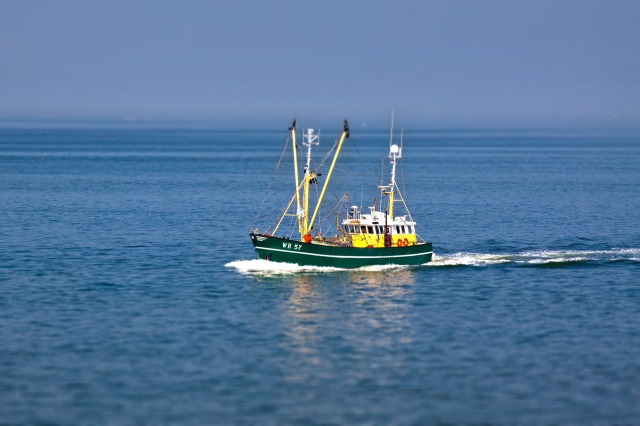
Well, maybe. It was only a few years ago that British fishermen needed protection from the Royal Navy as 40 French boats surrounded five British vessels during the so-called “Scallop War” in the English Channel.
Britain only ever had 13 per cent of the EU’s total sea area – but had been allocated 30 per cent of the total catch quota, and had the right to fish just about anywhere. Perhaps the real problem is that we just don’t eat enough fish – nearly two thirds of all fish landed in Britain are exported to other EU countries.
At the moment, those fish exported from Cornwall to Europe are free of additional taxes. But outside of the EU, tariffs are almost certain. I have to say that I don’t see a massive expansion of the Cornish fishing fleet any time soon.
Cornwall’s farmers were divided over Brexit, but none will welcome the prospect of beef tariff exports of 59 per cent. Dairy farmers whose income depends partly from cheese exports will soon be looking at tariffs of 40 per cent. Cornish vineyards might not export a huge amount, but a 14 per cent tariff will not help their market to grow.
Plenty of farmers have warned that unless they are allowed to hire (cheap) migrant workers, their crops will have to rot in the ground. One farmer went on TV last week to predict that Britain will run out of fresh fruit and vegetables in only five days once the migrant agricultural workers have gone.
And the Common Agricultural Policy payments to farmers – worth an average of £16,000 a year, each – will have to be replaced by some hitherto unspecified deal with the UK government. Good luck with that.
The value of sterling – one of those boring bits of news they stick at the end of each bulletin – will also impact on food prices in supermarkets. The pound has dropped nearly 20 per cent since June, and will almost certainly fall further and faster as we approach the March deadline for starting formal withdrawal from Europe.


It was the slump in sterling which saw last week’s Great Marmite Crisis, as suppliers and retailers squabbled over which of them should feel the pain.
My friends at Defra tell me to stop worrying and just look on the bright side. The massive shake-up in food chains could lead to a renaissance in agricultural markets, they say, restoring the Cornish countryside to the green and pleasant land we always thought it was.
Indeed. Once I have found someone willing to invest in my latest “flying pigs” wheeze I will know that I have arrived in the New Jerusalem. Rule Britannia!
Wednesday, 12 October 2016
Bring back the deposit
Going for my weekly jog along the country lanes I noticed that someone had dumped an old cooker by the side of the road. Ugly, possibly dangerous, it looked almost as if someone was trying to open as shop dealing in second-hand goods. A dirty, tattered mattress lay in the hedge alongside, next to a broken armchair.

This week’s news that fly-tipping is on the increase will probably come as no surprise to anyone – the cost-benefit metric changed dramatically a couple of years ago when Cornwall Council introduced charges for taking certain types of rubbish to recycling centres.
Asbestos, tyres and general construction wastes have little “recycling” value and it wasn’t surprising that councils were keen to recover the costs of dealing with them. But now we know that the cost of not dealing with them is even higher – £67 million across the country, last year.
We are rightly indignant about the louts who spoil the beautiful Cornish countryside, but the problem is actually far worse in urban areas. Per head of population, the six councils with the worst problems are all in London. According to Defra, there were nearly one million cases of fly-tipping in England and Wales last year – more than a third of them in London.
While some of this fly-tipping stems from laziness, much of it appears to be organised. About a year ago we reported how three men were ordered to pay more than £262,000 for illegally dumping more than 60,000 tonnes of waste in South East Cornwall.
The men were a haulier, and two farmers, and between them they had dumped nearly 66,000 tonnes of builders’ waste on farms at Callington and Saltash.
Last year we also reported details released under the Freedom Of Information Act, which showed that Cornwall Council had spent £743,000 cleaning up fly-tipping since 2012, dealing with 12,000 cases.
In the 12 months since the charges were introduced at recycling centres, Cornwall saw an increase of 1,400 in the number of fly-tipping incidents.
All of these statistics make for pretty gloomy reading, so it is comforting to retreat to the world of sepia-tinged nostalgia and recall how, half a century ago, I used to make a few shillings by collecting empty bottles and taking them to the nearest off licence.

The idea was that consumers effectively paid a deposit on a glass bottle, which was then refunded when the empty bottle was returned to a participating retailer. The system effectively died out in Britain with the advent of disposable plastic bottles.
But in the United States – where bottle deposits are still widespread – figures show that the higher the deposit, the more likely a bottle is returned intact. In the US, where container deposits are still widespread, there’s a 70% return rate. Empty bottles are worth five cents.
The deposit scheme is of course simply another way of collecting a tax – and enforcing the principle that the polluter should pay. Instead of charging council tax payers £67 million for dealing with fly-tipping, manufacturers could (and should?) impose a small “deposit” for the return of an item at the end of its life.
Perhaps with fly-tipping, we should recognise that what we are dealing with is a form of organised crime – and get our retaliation in first.
Wednesday, 5 October 2016
All eyes on St Ives
Once upon a time, at this point in the year, I was likely to be found in a run-down seaside town somewhere, listening to all manner of plots and conspiracies advanced by a small group of desperate people who were trying to take over the country.

They were not alone. Every party conference had an exhibition area where lobbyists would hang out, distributing pencils and car stickers to anyone who loitered too long in one spot. This year, Cornwall Council has sent a small team to each of the main party conferences in the hope that somebody, somewhere, cares anything about what they think at County Hall in Truro.
As news filters back from this year’s conferences, I was reminded of the “Rural Coalition” – a network of organisations which formed in 2014 in the hope of influencing policies ahead of the 2015 general election.
Its founding premise was, and still is, a good one: that rural Britain should consist of vibrant, living, working communities and not become merely gated communities of wealthy retireds, who have been able to exploit house-price inequalities by stripping the equity out of London and the South East.
The question of social housing loomed large in the Rural Coalition “manifesto,” thrust at surprised conference delegates. There were also other fascinating facts: “By 2028 the over-85 age group is set to increase in rural areas by 186% (compared with 149% in the UK as a whole). A growing number needing social care. By 2029, it is estimated that there will be 930,000 people with social care needs living in rural areas.”

The Rural Coalition, which is led by former Euro MP (and Cornwall councillor) Lord Robin Teverson, was long on good questions but, not surprisingly, short on clever answers. Its manifesto called for political parties to “Strengthen the role of neighbourhood plans within the planning system where advanced community-led proposals conflict with developer-led proposals that fail to meet local needs. Require ‘change of use’ permission for new second homes in rural and coastal areas where there is a shortage of local housing and a high density of second homes.”
Who could be against such a sensible suggestion? Unfortunately politicians are a good example of clever people who are often surprisingly ignorant. Margaret Thatcher once told me that Cornwall was “an ice cream county” and seemed genuinely astonished when I gently suggested that schools, hospitals and houses might also be a good thing.

On another occasion, I found myself (accidentally) invited to a party at Rock, by friends of the then-Chancellor Kenneth Clarke. “And where do you live?” I was asked. “St Mabyn,” I replied. “No, where do you really live?” insisted the hostess, astonished that anyone actually lived in the area all year round. I felt like a refugee in my own country.
Next Wednesday the courts will pass judgement on an attempt by people in St Ives to take control of the situation themselves. More than 83 per cent of St Ives voters backed a plan to restrict the growth of new second homes – to the fury of estate agents and property developers, who also tend to lobby at party conferences. The St Ives case has implications for the whole country, and Cornwall in particular. It is a shame that our fragile democracy now has to hang on the threads of a ridiculously expensive Judicial Review.
Subscribe to:
Posts (Atom)